
St Michael, Big Lake
Opener Repair for St. Michael's Late-1990s Garages
St. Michael homes built mostly in the late 1990s run garage openers with boards now pushing 25 years. We diagnose opener faults on site, from Big Lake.
Popular Services
What Is on the Truck
St. Michael has about 6,981 households, which is small enough that the opener calls we get here don't vary much. Most houses in town went up in the late 1990s, median build year 1997, which puts their openers squarely in the chain-drive-with-circuit-board generation that's now pushing a quarter century old.
Narrow model window
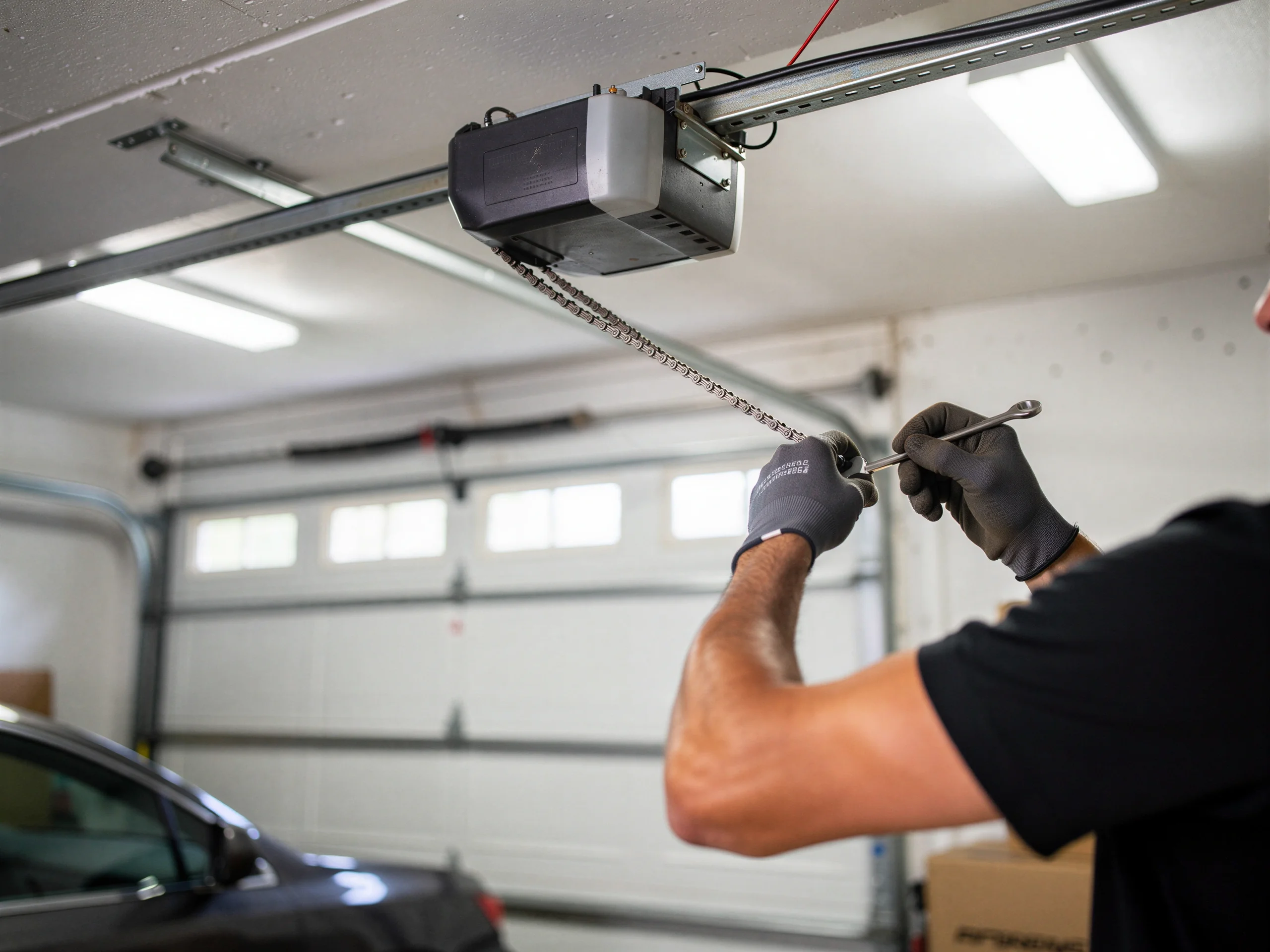
That's a narrower window than you'd think for a town this size, and it changes what we carry. On the truck for a St. Michael call: logic boards and control panels sized for late-90s and early-2000s openers, drive gears and sprockets for chain units from that run, replacement capacitors, matched safety sensor pairs, and travel limit modules.
No smart opener stock
We don't load up for belt-drive smart openers the way we might for a newer subdivision, because that's not what's on most garages here yet. What we don't carry is every board for every opener ever made.
Rare import part orders
If a unit is a rare import or an oddball model outside that late-90s/2000s window, we may need to order the part rather than fix it on the first visit. That's the honest tradeoff of stocking for the houses that are actually here instead of every possibility.
Where This Job Goes Sideways
The call usually starts as "the opener won't work" and sometimes turns into something bigger once we're in the garage. A dead-looking opener from a house built in that 1997 range is often a board that's simply reached the end of its service life, not a wiring fault we can patch.
Board sourcing return trips
When that happens, repair isn't really repair - it's a board swap, and sometimes the board for that specific model isn't stocked anywhere nearby, which means a return trip. At a median household income of $130,814, more St.
Whole-unit replacement choice
Michael owners choose to replace the whole opener outright once we explain that a 25-year-old board is the problem, rather than pay for a part that may fail again in a year or two anyway. That's not us pushing a sale - it's the math on an aging board in a unit that's already outlived its expected run.
Sensor and chain first
The other way this goes sideways: a homeowner assumes the opener is broken when the actual fault is a misaligned safety sensor or a slipped drive chain, both cheap fixes. We check those first on every call, because charging for a board when the fix was a ten-dollar sensor bracket is the kind of thing that gets a company's name said around town for the wrong reason.
Doing It Yourself
Some of this is fair game for a homeowner with a ladder and ten minutes. Wipe the lenses on the two safety sensors near the floor track and make sure they're pointed at each other - dust and cobwebs cause more "broken opener" calls than actual broken openers.
Breaker and travel limits
Check the breaker before you call anyone. If the opener runs but the door won't travel the full distance, the travel limits may just need a small adjustment, and most owner's manuals walk through that. What we'd tell you not to touch: the logic board itself, the capacitor, or anything behind the motor housing cover.
Stored charge and misdiagnosis
These carry stored charge even unplugged, and misdiagnosing a board fault by swapping parts at random usually turns a $150 fix into a $400 one. If your opener is from that late-90s to mid-2000s build era and it's making a single relay click with no motor response, that's a board symptom, not a DIY one.
No warranty on others' boards
The honest limit here: we don't do same-day warranty work on boards we didn't install, and if a part needs to be special-ordered for an older unit, that's a wait measured in days, not hours. We'll tell you that up front rather than promise a fix we can't deliver on the first visit.
The Symptom
The specific complaint we hear most from this part of the service area: the opener runs - you can hear the motor - but the door won't close all the way, or it starts down and reverses back up on its own. In a cold-climate service area, winter temperatures make a tired capacitor or a sagging limit switch fail exactly when you need the door to open, because cold thickens grease on the rail and makes the motor work harder to clear the same travel distance it managed fine in July.
On an opener from a house built around 1997, that symptom is often the capacitor losing its charge-holding ability with age, not a wiring fault. The motor gets a weak start, strains against stiff cold-weather resistance in the track, and the safety reversal logic reads that strain as an obstruction and sends the door back up. It looks like a sensor problem. It's usually not.
We test the capacitor's actual output against spec before replacing anything, because guessing on that part means a return trip in January when it fails again. If the capacitor tests fine, we move to the board itself - and at that point, given the age of most units in town, replacement usually makes more sense than repair.
Questions
Common questions
Why does my opener work fine in summer but struggle all winter?
Cold thickens the lubricant on the track and makes the motor work harder to move the door the same distance. A healthy opener handles that fine. One with a weakening capacitor or a tired board often can't, and the extra strain trips the safety reversal, so the door looks like it's refusing to close.
Is it worth repairing an opener from a house built in the late 1990s?
Depends what's failed. A sensor, chain, or capacitor is a straightforward fix on a unit that age. A failed logic board usually isn't, since boards for openers from that era are getting harder to source. At that point we'll tell you plainly whether replacement is the better money.
Do you carry parts for older openers on the truck?
We stock boards, gears, capacitors, and sensors sized for the chain-drive openers common in homes built through the late 1990s and early 2000s, since that's most of what's in St. Michael. Rarer or imported models sometimes need an ordered part.
How far out is St. Michael from your base?
We run out of Big Lake, about 10 miles from St. Michael. We don't keep a separate branch there, so scheduling runs through the same crew that covers the rest of the service area.
Explore more
More Services in St Michael
Ready when you are
Garage door opener acting up in St Michael?
Big Lake Garage Door Pros repairs and installs garage doors, springs and openers in Big Lake, MN and the surrounding area.