
 Openers, Power Cuts, and the Big Lake Housing Stock
Big Lake homes built 1973-2007 pair aging chain-drive openers with a cold climate that drops power.
The Sounds Your Big Lake Garage Door Makes, Explained
Big Lake homes built 1973-2007 make specific noises as cold winters stress hardware that's now 20 to 50 years old. Here's what each sound actually means.
Local detail
What Is Going On
Most of the garages around Big Lake went up between 1973 and 2007, with the median build year landing around 1995. That matters for noise because a door and opener installed in the Reagan or Clinton years is still running on its original springs, rollers, and sometimes the original opener motor. Across the 19 named areas that make up this part of the county, the bulk of that housing stock is 1980s and 90s construction - which means a lot of garages are hitting the 25- to 45-year mark on hardware that was never meant to run that long without attention.
A new rattle, squeal, or thud usually isn't random. It's a specific part telling you it's near the end of its design life, or that something shifted out of alignment. A door built in 1995 has had three decades of temperature swings to work springs loose, stretch cables a hair, and wear rollers down to a shape they were never cut to have. The noise is the symptom. The build era and the winters since are the cause.
If your house falls outside that 1973-2007 window, some of this still applies, but the specific parts and ages will be different, and so will what the sound is trying to tell you.
The area
What Local Conditions Do
Big Lake sits in a climate zone rated cold-severe, and that's the other half of the noise story. Steel contracts in deep cold and expands again every time the door comes up into a warmer garage interior. That cycle happens dozens of times a season here, and it's harder on a 20-to-45-year-old torsion spring than on a new one, because metal fatigue is cumulative - every cycle uses up a little more of the spring's life.
Cold also stiffens grease and lubricant inside rollers and hinges, which is why a door that ran quiet in September can start grinding by January. The slab under the door moves too, as frost heaves and settles through a hard winter, which can throw a track out of true by a fraction of an inch - enough to turn a smooth roll into a scrape or a clunk every time the door passes that spot.
None of this is unique to one house. It's the combination of a cold-severe winter and hardware that's now decades into its service life that produces the specific noises - the metallic ping of a spring losing tension, the grinding of a dry roller, the hollow bang of a loose track bracket - that homeowners here keep asking about.
What we find
Where People Go Wrong
The most common mistake is spraying WD-40 on everything and calling it maintenance. It's not a garage door lubricant, and on rollers and hinges that are already 20-plus years old, it washes out what grease remains and can make the grinding worse within weeks, not better.
The second mistake is adjusting a noisy opener's force settings to make it "push through" a noise instead of finding out what's causing it. On a door from the 1980s or 90s, a new groan under load is often a spring that's lost a meaningful share of its tension - cranking the opener up just makes the opener work harder to compensate, which shortens its life too.
The third mistake, and the one I see most in this build era, is assuming a noise is cosmetic because the door still opens and closes. A torsion spring that's visibly stretched or has a gap in a coil isn't a noise problem anymore, it's a door that can drop unexpectedly. I won't talk anyone into a bigger job than they need, but I also won't tell someone a grinding spring is fine just because the door still moves - that's exactly how a cable snaps or a door comes down on something underneath it.
How we work
When to Call Someone
A rhythmic metal-on-metal squeal that gets worse as the door moves is almost always a dry roller or hinge pin - cheap to fix, and worth doing before it wears a groove into the track. A loud bang or pop, especially in extreme cold, can be a spring losing a coil or a cable popping off a drum; stop using the door and call rather than cycling it again to see if it happens twice.
A grinding or scraping sound localized to one spot on the track usually means the track has shifted, which happens more than people expect once a slab has gone through a few decades of frost heave. A low groan from the opener under load, paired with the door feeling heavier than it used to, points to spring tension loss rather than the opener itself.
One honest limit: I can't diagnose a specific noise over the phone with full confidence. I can narrow it down from what you describe, but on anything involving a spring or cable, I want eyes on it before quoting a fix, because a worn spring and a misaligned track can sound almost identical from the garage side of the door.
Questions
Common questions
Why does my garage door only make noise in the winter?
Cold stiffens the lubricant in rollers and hinges and shrinks the steel in your springs and track slightly, which is enough to turn a quiet door into a noisy one. In Big Lake's cold-severe climate, that seasonal swing is bigger than in milder areas, so winter-only noise is common and usually points to lubrication or tension, not a broken part - yet.
My house was built in the 1990s - is that why the door is loud?
Possibly. A lot of the housing here dates to the 1980s and 90s, which means original springs and rollers on many doors are now 25 to 45 years old. That's well past the expected working life of most torsion springs, so age alone can explain a new squeal or grind even without any single event causing it.
Is a popping sound dangerous or just annoying?
Treat it as a warning. A sharp pop, especially paired with the door feeling suddenly heavier, can mean a spring coil has failed or a cable has slipped off its drum. Stop operating the door and have it looked at before using it again - that's a load-bearing part failing, not a cosmetic noise.
Can I just lubricate the noise away myself?
Sometimes, if it's dry rollers or hinges - a garage-door-specific lubricant (not WD-40) on those points can quiet things down. But if the noise is coming from the spring, track, or opener gearing, lubricant won't fix it and can mask a bigger problem until it fails without warning.
Recommendation
You Might Also Like
More garage door guides for Big Lake homeowners.
Openers, Power Cuts, and the Big Lake Housing Stock
Big Lake homes built 1973-2007 pair aging chain-drive openers with a cold climate that drops power.
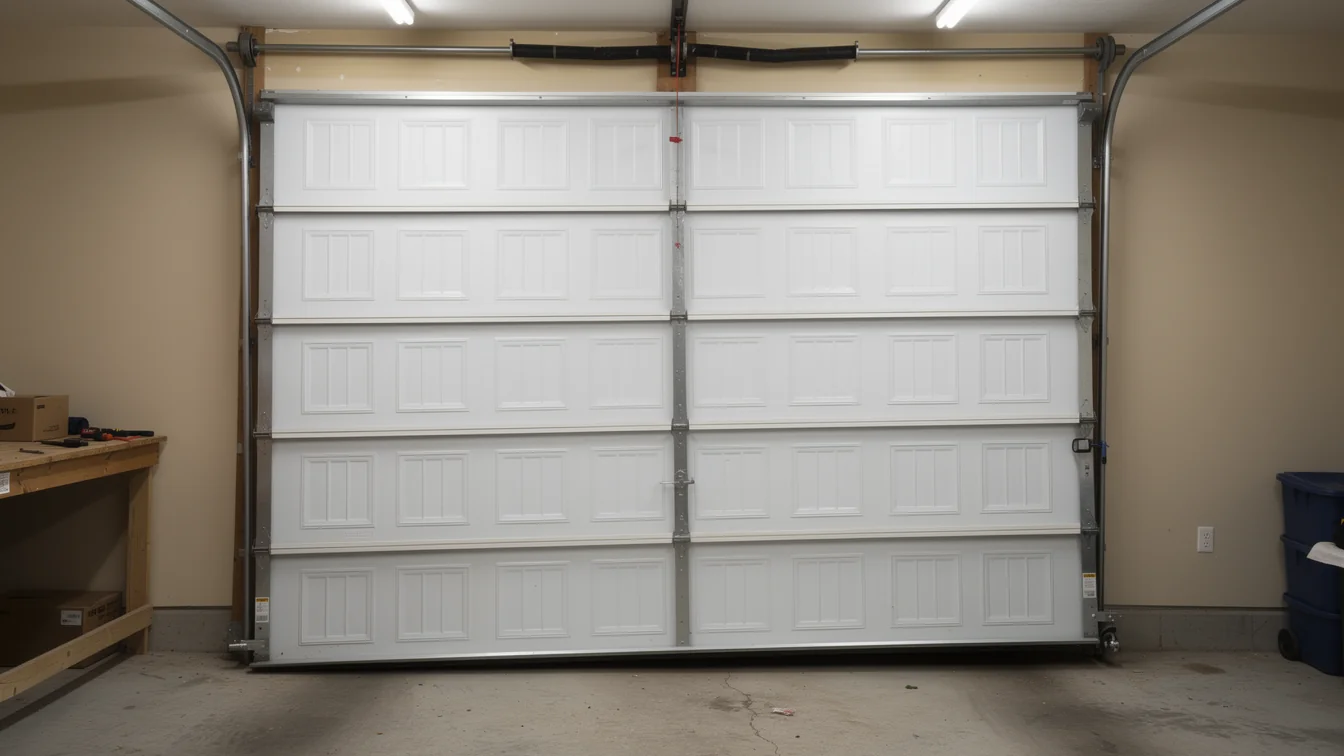 Why a Garage Door Goes Off Track Here
Big Lake's 1970s-2000s housing stock and severe cold band both push tracks out of alignment in specific ways.
 What a Broken Spring Looks Like in a Big Lake Winter
Big Lake homes built between 1973 and 2007 carry springs sized for original openers.
Ready when you are
Need a garage door sorted in Big Lake?
Big Lake Garage Door Pros repairs and installs garage doors, springs and openers in Big Lake, MN and the surrounding area.