
St Michael, Big Lake
Garage Door Repair for St. Michael's Late-1990s Housing Stock
St. Michael's garages mostly date to the late 1990s. We know the torsion springs, openers, and cold-weather faults that come with that build era, and we drive the 10 miles from Big Lake to fix them.
Popular Services
What Is on the Truck
St. Michael's median build year sits at 1997, which tells us most of what we need to know before we even pull into the driveway.
Center shaft door setup
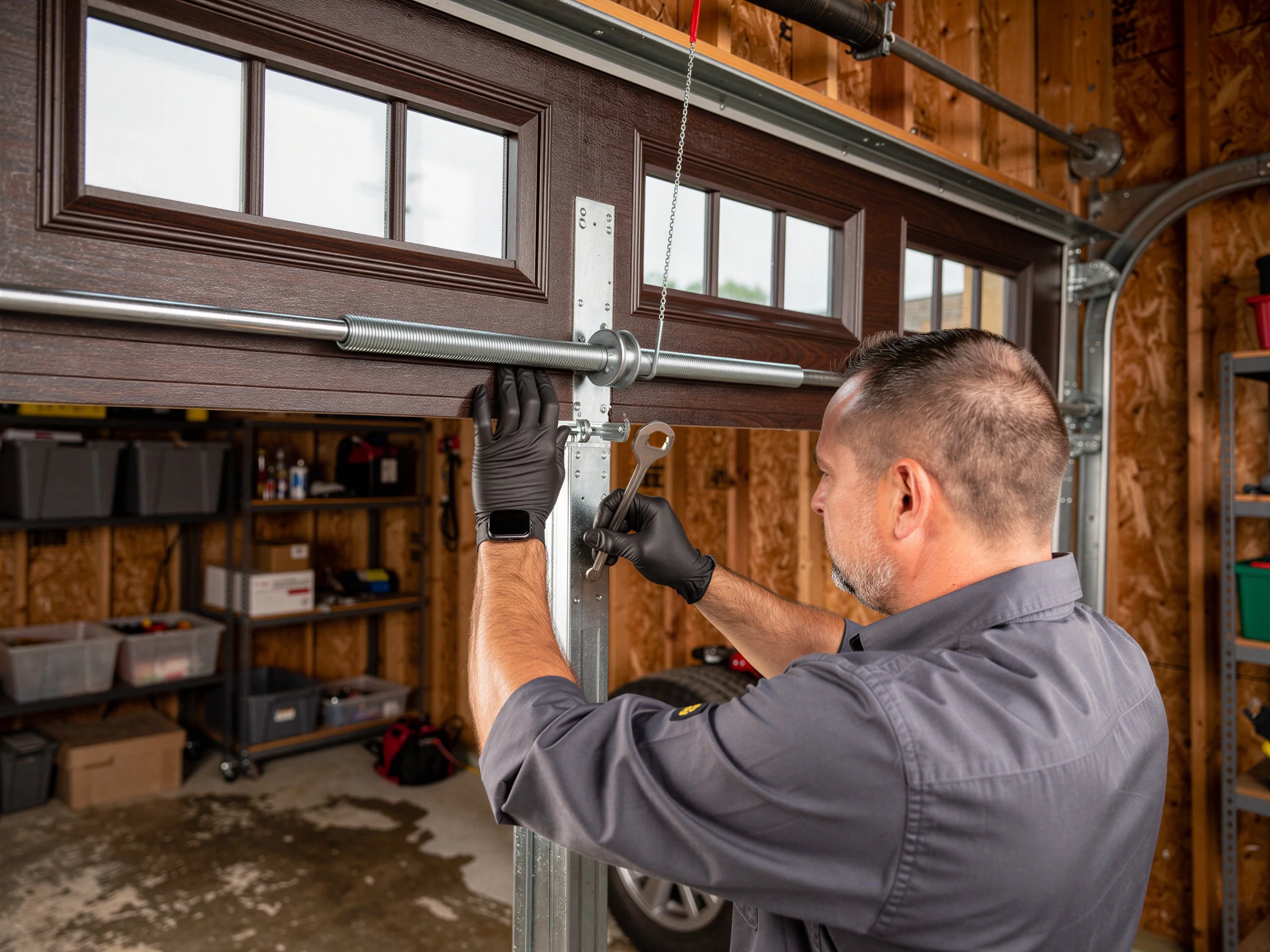
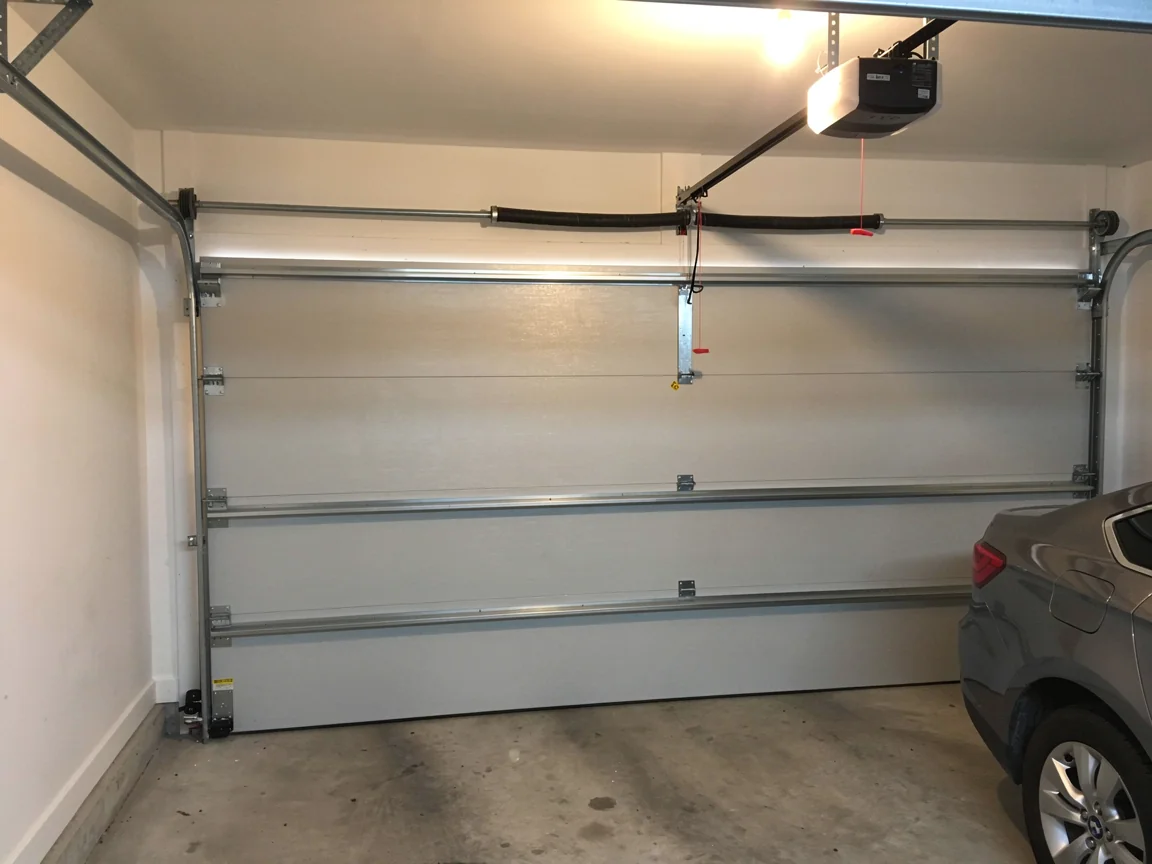
Houses from that stretch almost always carry a single steel sectional door on a center torsion shaft, one spring rated for a set number of cycles, and galvanized rollers that were fine for the first decade and have been noisy for the last one.
Standard opening spring sizes
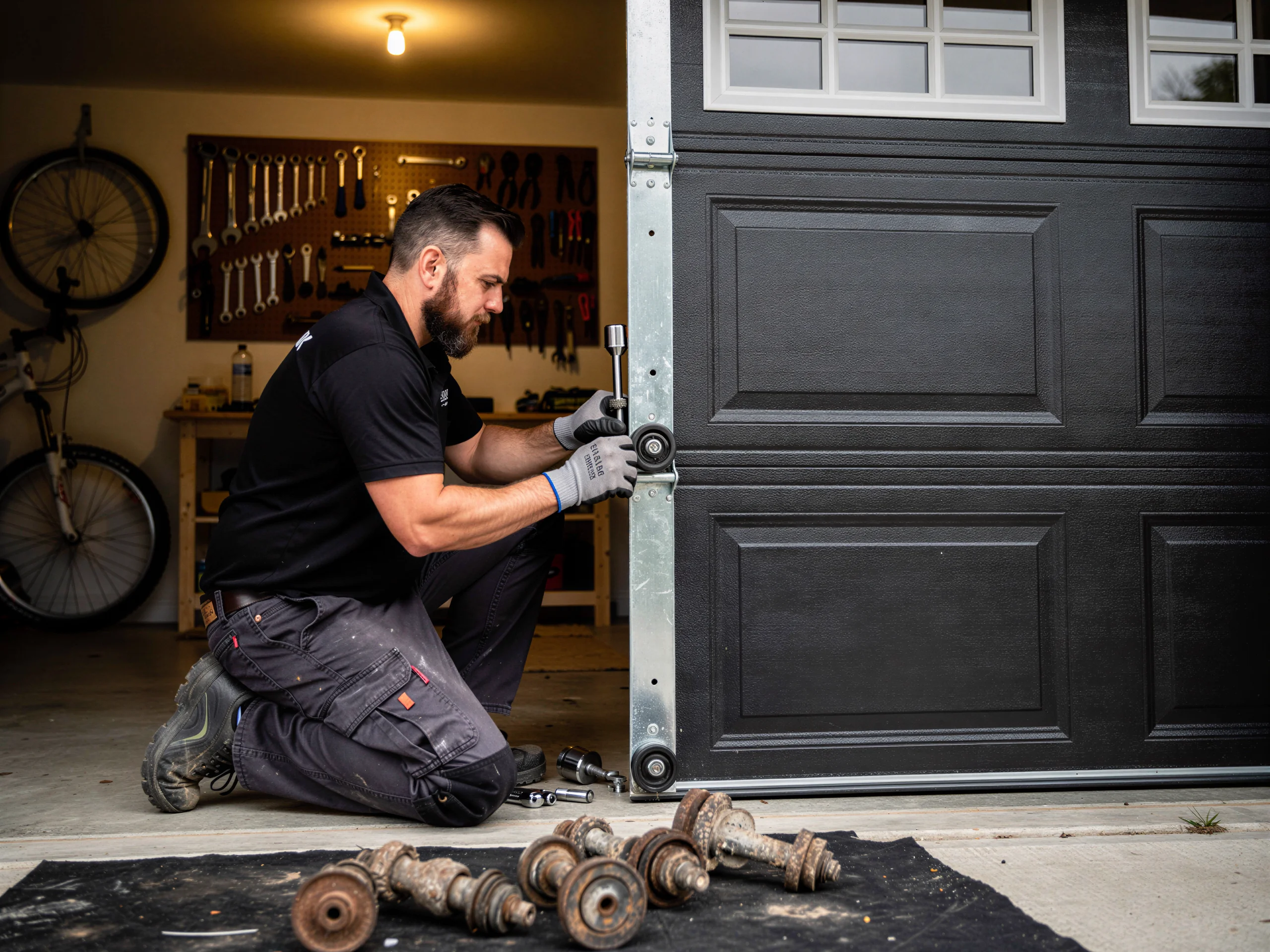
We load torsion springs sized for the standard 7-by-9 and 8-by-7 door openings that era favored, plus the stamped-steel end bearing plates that fail on those shafts, drums for the lift cable, and a cold-rated lubricant that doesn't gum up when the temperature drops. The county sits in a severe cold climate band, and grease matters more here than people think - the stuff that's fine on a July install turns stiff by December and starts eating rollers and bearings from the inside.
Late-90s opener parts
We also carry logic boards and belt-drive parts for the openers that came standard with these builds, since original units from the late 90s are now well past a reasonable service life. What we don't carry is custom millwork or anything built to match a door that's been discontinued for twenty years - at that point we're talking replacement, not repair.
Where This Job Goes Sideways
The fault we see most in St. Michael is a torsion spring that lets go on the first hard cold snap of the year. A spring installed when a house went up in 1997 has had close to three decades of cold-weather cycling on it, and most of them are well past the point where we'd call them trustworthy.
Opener strain from spring
When it breaks, the door either won't budge or drops fast on one side, and the opener - which was never built to lift a two-car door without spring assistance - starts straining its gears trying to compensate.
Second failure behind first
That's the second failure waiting behind the first: a motor unit worked hard enough, long enough, burns out the drive gear or the capacitor, and you end up paying for an opener on top of a spring. Add in a cold snap stiffening the lift cable or drum bearing, and a job that should be a thirty-minute spring swap turns into diagnosing three worn parts instead of one.
Build year first question
We see this pattern often enough on houses from this build window that we usually ask the year of the house before we ask what's wrong with the door - the two are connected more often than not.
Doing It Yourself
A torsion spring under tension can break a bone or worse, and we won't talk anyone through replacing one over the phone - that's not us being cautious for no reason, it's just the job.
Quick homeowner checks
What a homeowner can reasonably do is check the easy stuff first: make sure the photo-eye sensors near the floor aren't knocked out of alignment, listen for a grinding opener motor versus a quiet one that just won't engage, and check whether the door moves freely by hand with the opener disconnected.
Heavy door means call
If it's heavy or won't budge at all, that's spring or cable, and that's a call, not a weekend project. Lubricating hinges and rollers with a garage-door-rated spray once or twice a year is worth doing yourself and genuinely extends the life of hardware in this climate.
Shaft and drum hands-off
Where it's not worth doing yourself: anything involving the torsion shaft, the cable drums, or the spring itself. We'd rather tell you that straight than have you find out the hard way.
The Symptom
The complaint we hear most from St. Michael calls is some version of "it worked yesterday, now the opener runs but the door doesn't move" - that's a snapped spring almost every time, especially after a cold night. A close second is a loud bang from the garage, usually first thing in the morning, which is the spring letting go on its own under tension rather than during use. Less dramatic but just as common: a door that shudders or hesitates partway up, which on houses from this era is usually a roller that's finally given out after years of cold-weather wear, or a cable that's started to fray on the drum. If the door is opening unevenly, higher on one side than the other, stop using the opener and call - that's a sign the cable or spring on one side has already failed and the other side is about to follow.
Questions
Common questions
How old does a torsion spring have to be before it's a risk?
It's less about age and more about cycle count, but on a house built around 1997 in this climate, most original springs are well past a reasonable service life. If yours hasn't been replaced since the house was built, treat a sudden loud bang or a door that won't lift as a strong sign it finally let go.
Do you have a shop in St. Michael?
No. We run out of Big Lake, about 10 miles away, and travel to St. Michael for service calls. There's no local branch or depot here - just the truck coming over when you call.
Why does my opener strain more in winter?
Cold grease stiffens on rollers, bearings, and the torsion shaft, and a spring that's already fatigued works harder to compensate. The opener wasn't built to lift the door's full weight unassisted, so when the spring is tired and the hardware is stiff, the motor takes on load it isn't rated for.
Is it worth replacing the whole door instead of repairing it?
Depends on the door. If the panels are rusted or dented and the opener is also failing, replacement often costs less over time than repeated repairs. If it's just a spring or a roller on an otherwise sound steel door from this era, repair is usually the better call.
Explore more
More Services in St Michael
Ready when you are
Need garage door service in St Michael?
Big Lake Garage Door Pros repairs and installs garage doors, springs and openers in Big Lake, MN and the surrounding area.